News and Updates

Little Gardens
2026-09-16
Welcome to Mike & Clare’s Farm new blog space! I’m feeling pretty done with social media – but I still want to post pictures and tell little stories about the farm! Thank goodness for the early aughts and blog-culture, right? I hope you’ll check in from time to time to see what we’re up to over here. Maybe RSS feeds will make a come back?
So what has been going on over here? We’ve been awfully quiet, you may have noticed. We took the season off in 2026. The farm and I were TIRED and we needed a break. The soil has mostly been sipping on cover crops all summer (or drowning in them – we’ll talk about that later). I’ve been hanging out with the kiddos and trying to relax, which is hard to do when you’re used to not relaxing. The plan is to get back to farming in 2027 (I’m even feeling a little excited about it?) – as for now, I’m just happy to not be crazy-eyed and wringing my hands over whether or not the turnips will size up.
I did a little bit of growing this season. I grew a little garden for my family – something I had never done before. I went straight from a tomato plant on my porch in Chicago to working on a 12 acre farm in Grayslake. I have long suspected that a garden might have challenges that a farm does not. Farms have the benefit of quantity. If a broccoli plant fails to head up, it almost doesn’t even register because there are a bunch of other broccoli plants right next to it, all sporting beautiful heads. Of course, if an entire bed of broccoli doesn’t head up, it can make you question your life choices in ways that a single plant in a garden never could. So I was a little worried when I planted my six kale plants and three parsleys. I knew I was a farmer, but could I also be a gardener? To my relief, the answer is yes – the tomatoes ripened, the deer eventually stopped eating my bean plants, I have onions coming out of my ears – we had plenty of vegetables, plus extra for freezing for later. I did have a few busts – the eggplant got hit early on with flea beetles and never recovered. The rabbits are still tending to my broccoli plants – nibbling them down, letting them grow a little, and then nibbling them down some more. I somehow managed to plant pie pumpkins, but no actual winter squash. A few failures, lots of successes – just like a real gardener.
Spring Break
April 4, 2025
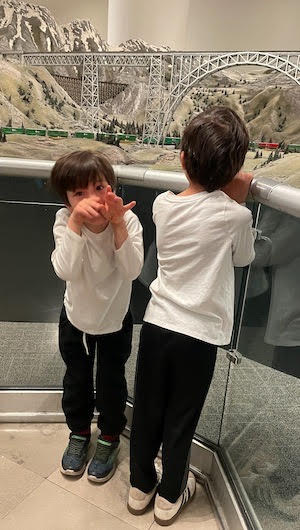
There's no time for farming today (or this week, if I'm being honest). It's spring break and the kids and I are going to the city to visit a museum. We'll drive in through changing landscapes — watch the buildings get taller and denser until the skyscrapers unfold before us. We'll see our favorite exhibits, maybe eat a donut, probably buy a trinket. When we're done, we'll dip into a city neighborhood for a cafe and a bookshop with a really good kids section. When we walk down city streets, we'll marvel at tree roots spreading over cobblestones, entangled with the bricks. We'll carefully navigate sidewalks — you have to stop at the alleys and look both ways — because we don't use them very much at home. We'll soak in the kind of energy that only a city generates— propelled by people, movement and curiosity. And despite the hours of traffic we'll face on the way back, we'll arrive home happy and sated. The place where we return will be noisier with birds and spring frogs and colored with a creeping electric green — a different kind of energy, for sure. We like to be filled up with both once in a while — two types of life thrumming through our bodies.
Getting Warmer
March 14, 2025
We start keeping watch in mid February. We read the weather forecast like prophetic texts — still freezing this week; next week it might snow. We're waiting for a hint, an upward trend. Sometimes it comes in February, one year we waited well into April, but eventually the temperatures will climb, the sunny days will increase and it will be spring.
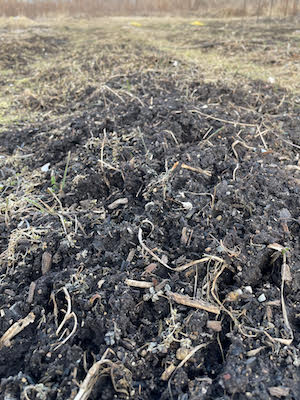
Even as the sun gets stronger and the air holds warmth, the ground still holds the winter cold. It's time to be careful. The soil will freeze and thaw, freeze and thaw over the next several week. The cycle has its benefits: crystals forming and reforming can improve soil structure — damaged soil has a chance to mend; seeds broadcast on top of frozen soil will be gently worked in by the expanding and contracting. The ground thaw also turns the soil into mud. So sticky and slick that you don't want to touch it. And you really, really don't want to touch it because working the soil in this state will damage it — turn the structure into an unworkable concrete. We'll wait. There's no forecast this time — no app to consult that tells us today it is safe to walk in your aisles, tomorrow it is safe to run a shallow hoe. We'll look outside, take a walk, feel the soil with our hands. It will be ready soon.
Items to Start the New Farm Season
March 8, 2025
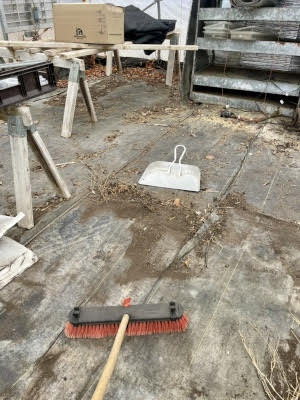
A broom, a dust pan because the greenhouse needs a good cleaning. A delivery of propane. Seeding trays and soil blockers. Masking tape because the tape from last year has melted into a giant ring of adhesive. A new sharpie because the old sharpie has migrated into the kitchen collection of pens. A plan. Seeds, ordered months ago and waiting in dark anticipation in a cooler in the basement. Potting mix, left over from last year. A hose, light and flexible, to be dragged from spigot to greenhouse whenever it freezes. A good weather app. A few heated mats to hurry things along. So much patience because beginning takes a lot of time.
Another Beginning
April 3, 2024
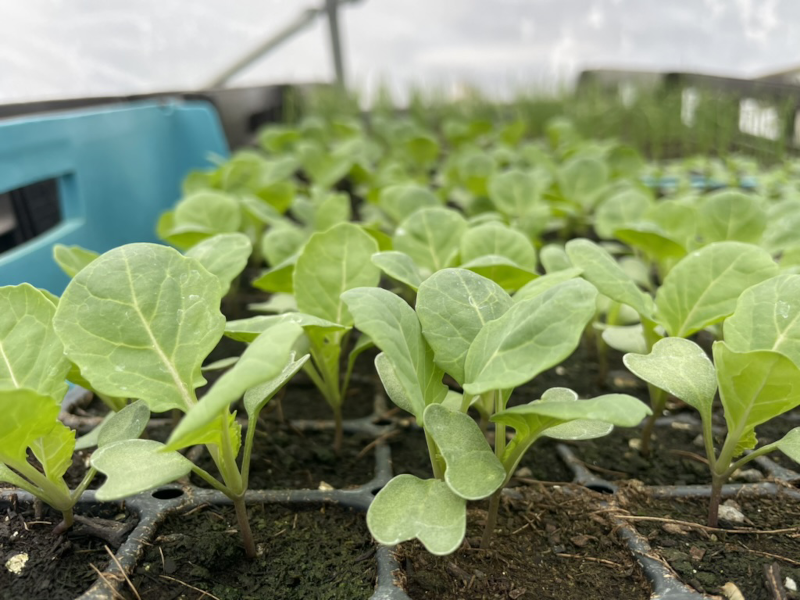
Welcome to season 2025! This marks our - gulp!—seventeenth year as a farm. Sixteen! When I was a first year farmer, surrounded by other first year farmers, it was passed around and accepted as true that you wouldn't really know what you were doing until you farmed for ten years. The amount seemed excessive. Who could wait that long? It was also passed around and accepted as true that a thistle patch would take seven years to fully control. Time stretches on forever when you're farming. I now know that the thistle canard isn't true - it's more like a year or two. I also know that ten years to achieve confident and serene farming knowledge might be a little generous. There is so.much.to.know. At sixteen years, I am a pretty good farmer. I know what to plant and when to plant it. I know what varieties work well in my garden and which ones taste the best. I know how to handle most bug and weed pests. I'm still getting a handle on diseases. Outside of crop rotation and resistant varieties, my disease prevention strategy is mostly to never, ever (ever) touch a plant when it's wet. It could use a little work. It's a relief to be on this side of the farmer-knowledge scale, just as it's a relief to know that each year has its own surprises and I will never know everything. At sixteen years, I know that the beginning of the season is a small, small thing - a light so tiny you can hold in your hand. It's impossible to know how it will grow - only that it will be green and bright and full of life - a whole universe -- until it's not and we settle in to wait for the next one.